What Happens in the Quiet: How Learning to Shut Up Made Me a Better Performer
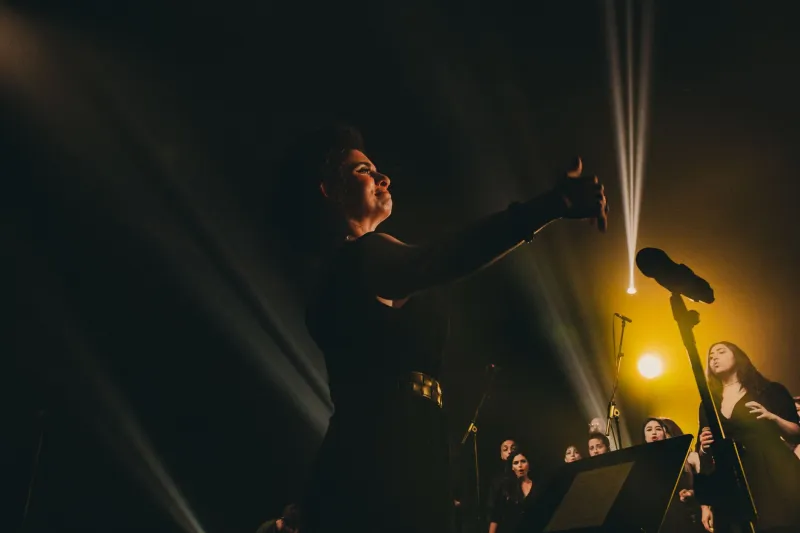
There's a moment — you've probably felt it from the audience side — where a performer says something, the room laughs, and then... nothing. Just a beat. A held breath. And somehow that silence hits harder than anything that came before it.
That's not an accident. That's craft.
For a long time, I treated silence like it was a problem to solve. A gap meant I'd lost the room. Dead air meant I was losing. So I'd rush, pile on, throw another joke or another line on top of the moment before it had any time to settle. I thought I was being sharp. What I was actually doing was stepping on my own best work.
It took years — and honestly, watching some performers who had absolutely no business being as good as they were — to understand that silence isn't empty. It's loaded.
The Neuroscience Nobody Talks About at Open Mics
Here's the thing about a laugh: it doesn't end when the sound stops. The audience's brain is still processing. They're making connections, feeling the emotional residue, sometimes arriving at a second layer of the joke they didn't catch the first time. When you barrel into your next line before that process completes, you're not building momentum — you're interrupting it.
Comedians talk about "stepping on a laugh" all the time, but the same principle applies to storytelling, public speaking, even a well-timed emotional beat in a monologue. The pause after the moment is where meaning gets made. You say something powerful, then you stop — and the audience's imagination does the rest of the heavy lifting for you.
That's a pretty good deal if you think about it.
What Jack Benny Knew That Most People Have Forgotten
If you want a masterclass in weaponized silence, go watch old Jack Benny clips. The man could get bigger laughs from doing absolutely nothing than most comedians could squeeze out of a tight five minutes of material. His famous "Well!" — that single word followed by a long, slow, almost offended pause — was practically a structural element of his act.
Benny understood something fundamental: the audience fills the silence with their own expectations, their own assumptions about what's coming. When you pause, you're essentially handing the crowd a pen and letting them write the next line in their heads. And then, if you time it right, you either confirm what they thought or you completely subvert it. Either way, they're invested. They've become participants instead of spectators.
That's a different kind of connection than just talking at people.
The Difference Between Dead Air and a Deliberate Pause
Okay, fair question: how do you tell the difference between a meaningful pause and just... forgetting what you were going to say?
Honestly? Confidence and intention.
Dead air feels like panic wearing a calm face. You can sense it — the performer's eyes go slightly unfocused, there's a subtle shift in posture, the energy drops instead of compresses. A deliberate pause feels like pressure building. The performer is present in that silence. They're not lost; they're waiting. And the audience, whether they consciously know it or not, feels the difference immediately.
The technical way I practice this: I mark my pauses the same way I mark my emphasis. In a script or outline, I'll literally write "[hold]" or "[let it land]" at specific points. That might sound overly mechanical, but what it does is train your body to treat the silence as part of the performance rather than a gap between performances. Eventually it becomes instinct. But instinct usually starts as deliberate repetition.
Timing Isn't a Talent — It's a Skill You Can Actually Build
I get a little frustrated when people talk about timing like it's some mystical gift you either have or you don't. That framing lets people off the hook from actually working on it.
Timing is pattern recognition combined with audience awareness. You learn to read the energy in a room — how quickly they're absorbing information, where their emotional temperature is, whether they need a moment to exhale before you push them somewhere new. That's not magic. That's paying attention and then being willing to trust what you notice.
One of the most useful exercises I've ever done: record yourself performing and then watch it back on mute. Seriously. Just watch your physical presence in the silence. Are you fidgeting? Looking away? Rushing to fill the space? Or are you grounded, present, letting the moment exist? Your body language in a pause tells the audience whether to trust the silence or get anxious about it.
If you look nervous, they get nervous. If you look like you own it, they lean in.
Restraint as a Power Move
There's something almost counterintuitive about the best use of silence, which is that it requires you to do less when every instinct is screaming at you to do more. Especially early in a performance when you're not sure the crowd is with you. The temptation to fill space, to keep talking, to prove you belong up there — it's overwhelming.
But restraint, when it's intentional, reads as authority. It signals that you're not chasing the audience's approval. You're inviting them into something. That's a fundamentally different relationship.
I've had moments on stage where I paused longer than felt comfortable, where I could hear my own heartbeat, where part of my brain was absolutely certain I'd miscalculated and lost the room entirely — and then the laugh or the reaction came, and it was bigger than anything I could've manufactured by rushing.
Those are the moments I remember. And more importantly, they're the moments audiences remember too.
The Silence Is Part of the Story
At the end of the day, whether you're doing comedy, storytelling, keynote speaking, or any other kind of performance, you're not just delivering content — you're shaping an experience. And experience has texture. It has rhythm. It has breath.
The words are the notes. The silence is the music.
Learn to love the pause. Stop treating it like the enemy. It's not the gap between your best moments — it's what makes your best moments land the way they're supposed to.
Shut up more. It'll make everything you say matter more.