When the Room Pushes Back: What Hostile Crowds Actually Have to Teach You
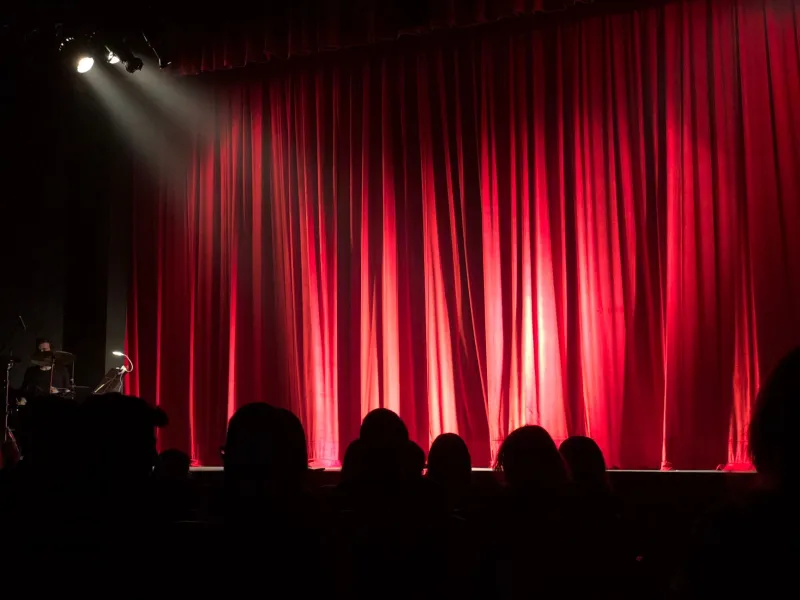
Let me set the scene. You're maybe ten minutes into your set — or your presentation, your pitch, your performance, whatever the format is — and something feels off. The energy is low, or it's actively pointed at you like a loaded question. Someone in the third row has their arms crossed. Someone else just said something under their breath that was definitely loud enough to count. The room isn't with you.
Most people in that moment want to either fight back or retreat. I've done both. Neither one works.
What actually works is something I had to learn the hard way, over years of performing in rooms that ranged from lukewarm to openly hostile. And the surprising thing? Those were the rooms that made me good at this.
The Heckler Is Not Your Problem
Here's the first thing to understand: the heckler — or the skeptic, or the checked-out table in the back — is almost never the real problem. They're a symptom. Something in the room went sideways before they opened their mouth, and they just happened to be the one who made it visible.
Maybe the energy was already sagging and they got bored. Maybe the crowd came in with expectations you didn't meet in the first two minutes. Maybe there's something happening in the room that has nothing to do with you at all — a bad week, a weird vibe, a group dynamic you walked into without a map.
When you start treating disruption as information instead of attack, your whole posture changes. You stop being defensive and start being curious. What is this room actually telling me right now?
That shift in framing is everything.
Don't Match the Energy — Redirect It
The instinct when someone pushes back is to push back harder. It feels satisfying for about three seconds, and then you've lost the room. Because here's the thing: when you escalate, you make the disruptor the center of the story. The whole crowd is now watching a fight, not a performance.
Instead, I've found that the most effective move is to acknowledge and redirect without feeding the beast.
Acknowledging doesn't mean agreeing. It means letting the moment exist without pretending it didn't happen. Audiences respect a performer who can absorb a weird moment and keep moving. It signals confidence. It says, I've been in tougher rooms than this.
Redirecting means taking whatever energy just got thrown at you and steering it somewhere useful. Sometimes that's a quick, dry callback to something earlier in your set. Sometimes it's a genuine question back to the audience that shifts the dynamic from adversarial to participatory. Sometimes it's just a beat of silence and a half-smile that says you're not rattled.
The key is staying calm enough to actually choose your response instead of just reacting.
Read What's Under the Surface
I've had nights where what looked like hostility was actually just nervousness — a crowd that didn't know how to engage and defaulted to silence or sarcasm because they didn't feel safe yet. Once I figured that out, the whole approach changed. They didn't need to be handled; they needed permission to relax.
I've had nights where someone heckling me turned out to be the most enthusiastic person in the room — just expressing it badly. Lean into that energy right and you've got an ally. Fight it and you've got a villain.
Learning to read what's actually happening underneath the surface behavior is a skill that takes time, and honestly, it never stops developing. But the practice is pretty simple: slow down, observe before you respond, and ask yourself what this person or this room actually needs right now.
Sometimes they need to feel heard. Sometimes they need you to be more interesting. Sometimes they genuinely just need you to call out the elephant in the room and laugh about it before anyone else does.
Mining Tension for Material
Some of the best bits I've ever developed came directly out of moments that went sideways. Not by planning it, but by paying attention.
When something unexpected happens in a room — a weird comment, an awkward silence, a technical failure, a person who will not stop talking to their neighbor — that's raw material. The audience is already focused on it. They want to know what you're going to do with it. If you can find something honest and even a little funny in that moment, you've just created something nobody else in the world has seen before, because it's happening live, right now, in this specific room.
That's a connection money can't buy and a script can't manufacture.
I'm not saying you go looking for trouble. But when friction shows up — and it will — having the reflex to see it as an opportunity rather than a crisis changes everything about how you perform under pressure.
The Quiet Ones Are Harder
Here's something nobody really talks about: the openly hostile crowd is actually easier to deal with than the quietly indifferent one.
Active resistance at least gives you something to work with. Silence is trickier. Bored energy is trickier. The room that's technically present but emotionally somewhere else entirely — that's where a lot of performers fall apart, because there's no clear signal to respond to.
The move there is different. You have to drop your energy down to meet theirs before you can bring it back up. Matching their temperature just long enough to feel like you're in the room with them, not performing at them from a distance. Then you start building. Slowly. Earning it.
It's less dramatic than handling a heckler, but honestly, it's the more important skill.
What Difficult Rooms Actually Gave Me
I used to dread the tough nights. The rooms that didn't cooperate, the crowds that made me work for every single inch. Now I think about them differently.
Every hard room taught me something a great room never could. Great rooms make you feel like a genius. Hard rooms make you better.
They showed me where my material was weak, where my presence dropped, where I was relying on momentum instead of actual craft. They forced me to develop tools I never would have bothered with if things had always gone smoothly.
So yeah — the heckler, the skeptic, the crossed-arms crowd in the back — they're not your enemies. They're your most demanding teachers. And if you're willing to learn instead of just survive the moment, they'll make you someone worth watching in any room, under any conditions.
That's the kind of performer I want to be. That's the kind of performer any of us should want to be.